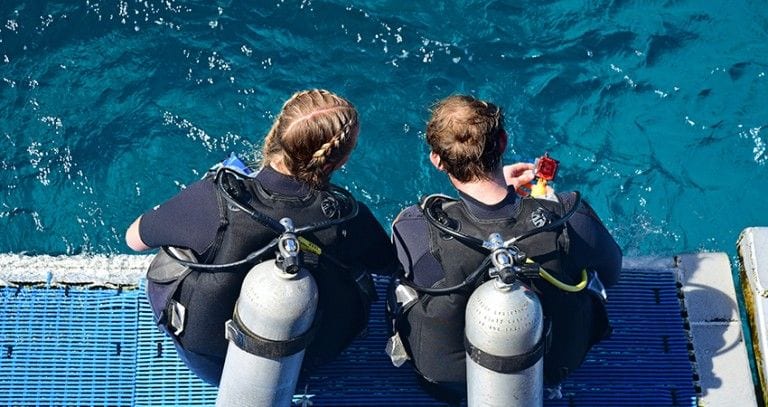

A dive briefing sounds like a formality by your tenth one, which is precisely when people stop listening properly. It is not a formality - it is the only moment where the plan for the next forty minutes exists outside somebody's head.
The four things that matter most
The maximum depth and time. Not the guide's - yours. If they are planning 26 m and you are Open Water certified, that number is a problem, and the briefing is when to say so rather than at 19 m.
The entry and the descent. Backward roll or giant stride, and whether you are descending on a line. Half the small dramas on a boat happen in the first ninety seconds.
Where the current is going. Which direction you swim first, and what you do if it picks up. If the answer is "we go with it and the boat follows the bubbles", make sure you know what your surface marker looks like.
The lost-buddy procedure. Search for one minute, then surface. Everybody nods through this one, and it is the piece of the briefing most likely to matter.
What a good briefing includes that a rushed one does not
A drawn site profile, an honest statement of the conditions rather than an optimistic one, and a specific abort criterion. A guide who tells you what would make them call the dive is a guide who has thought about it.
Asking a question is not rude
Nobody on that boat thinks less of the diver who asks how deep the sand is. Several of them wanted to know.